The earliest references to Tashkent as a settlement appear in written sources in the second century BC. Chinese annals call it Yueni or Shi; Persian records call it Chach; Arabic sources say Shash. The name Tashkent itself first appears in Turkic documents between the ninth and twelfth centuries.
A favourable position and a mild climate made it one of the main Silk Road cities. In the fourteenth and fifteenth centuries it belonged to the Timurid Empire; in the sixteenth it came under the Sheibanid dynasty; in 1930 it was declared the capital. Today it is the country's business and cultural centre, and the arrival point for most visitors.
What to see
- Hazrati Imam Complex — home to one of the oldest Qur'ans in the world, attributed to Caliph Uthman (RA).
- Chorsu Bazaar — under its great blue dome; the best introduction to Uzbek food anywhere.
- The Metro — each station designed as its own room. Ride it for its own sake; photography is permitted.
- Kukeldash Madrasah — sixteenth century, in the old city.
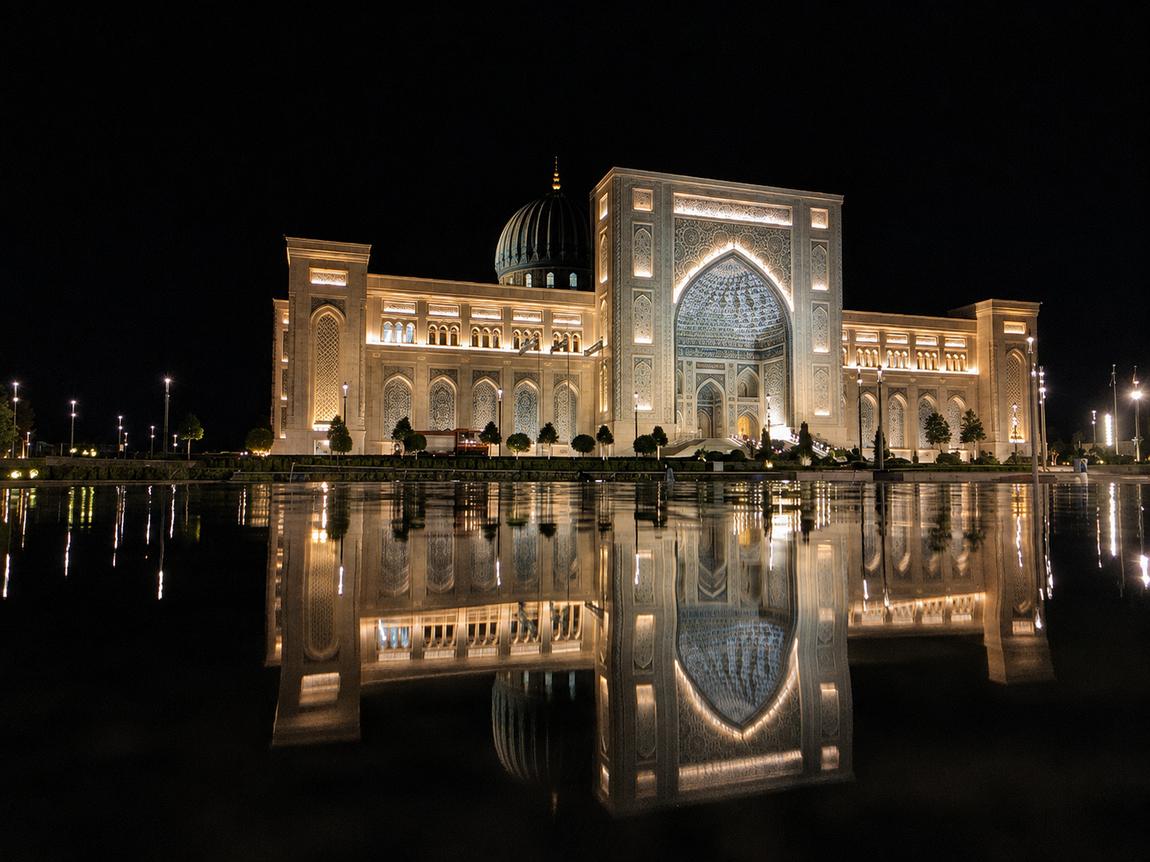
- Centre of Islamic Civilisation — the new national institution devoted to Islamic scholarship in the region.
- Amir Temur Square and the Broadway — where the city walks in the evening.
How long to stay
One or two days. Many travellers give Tashkent a single day on arrival and a second on the way home for shopping. From here the Afrosiyob high-speed train reaches Samarkand in a little over two hours and continues to Bukhara.