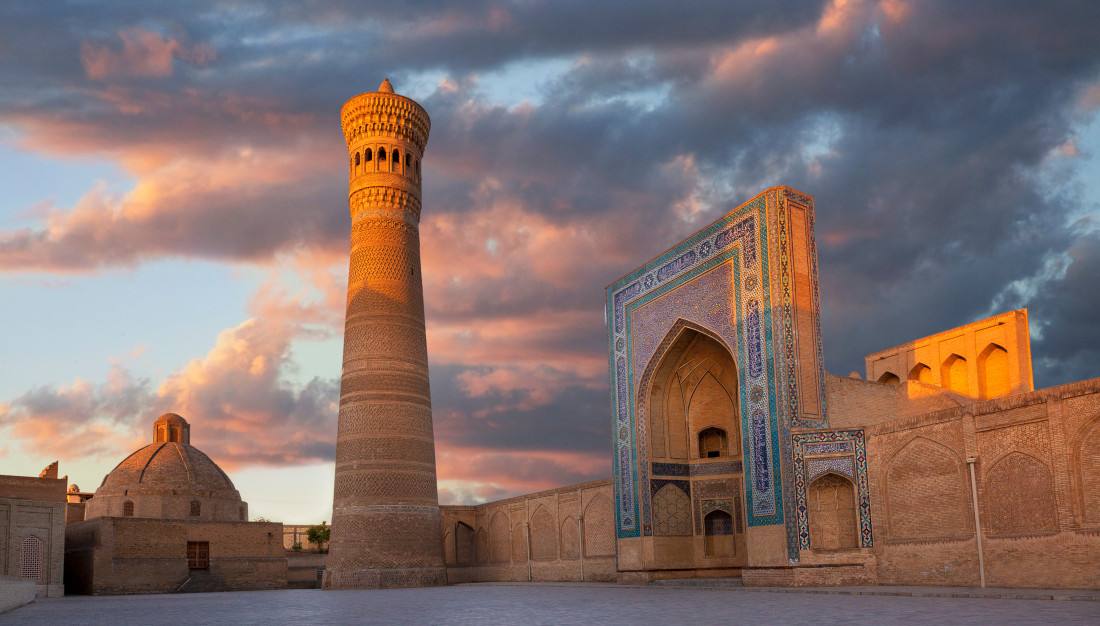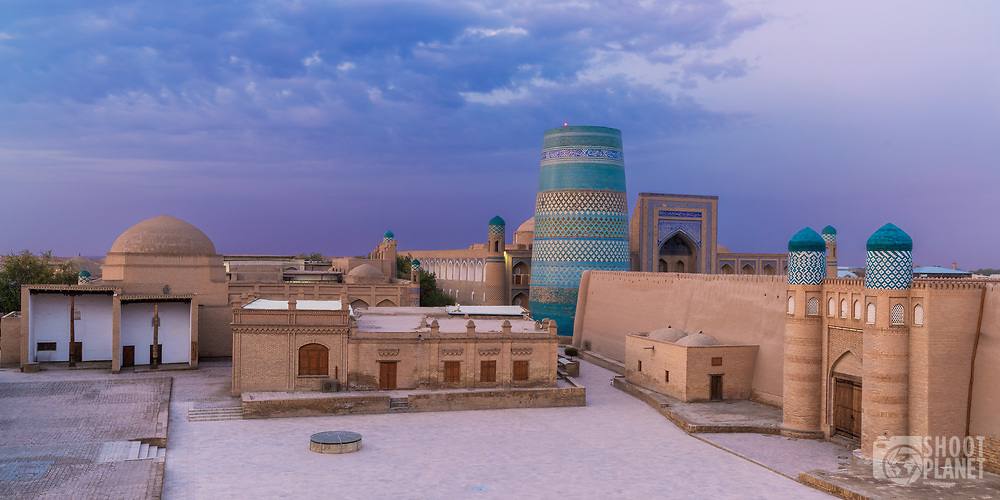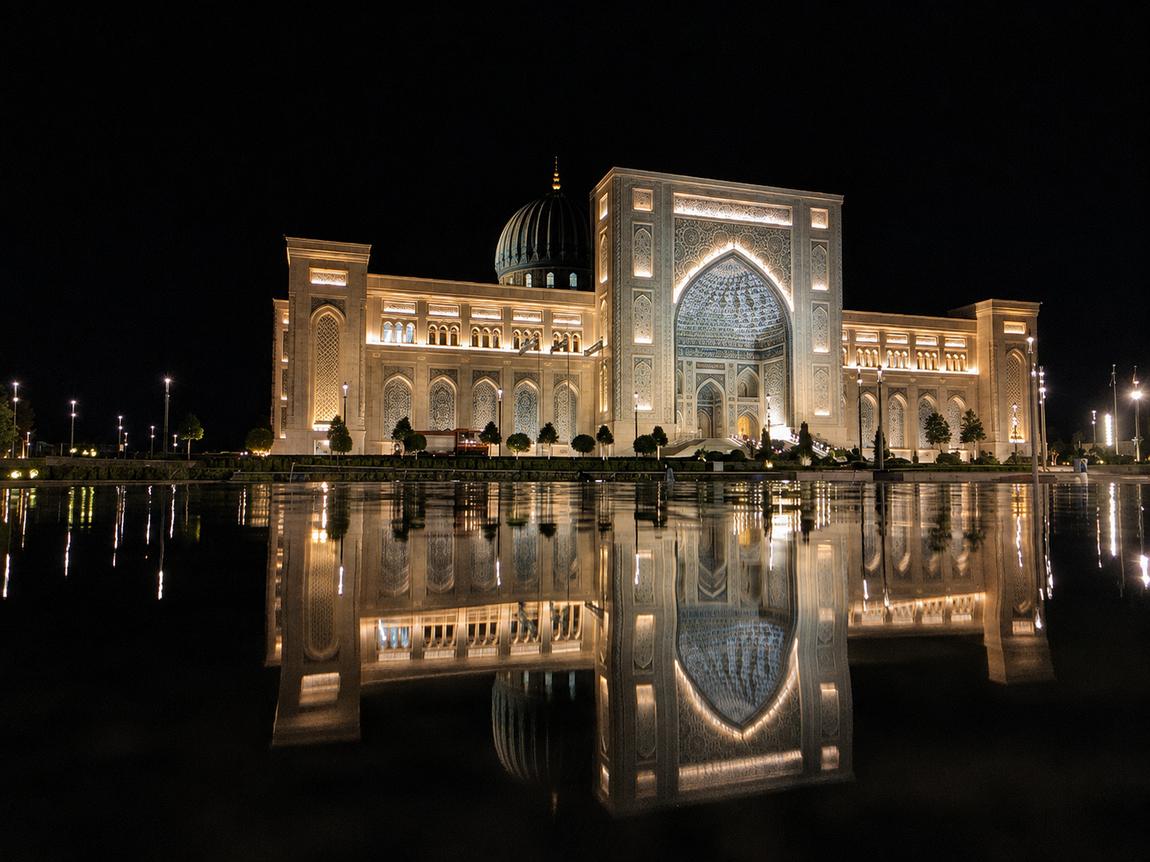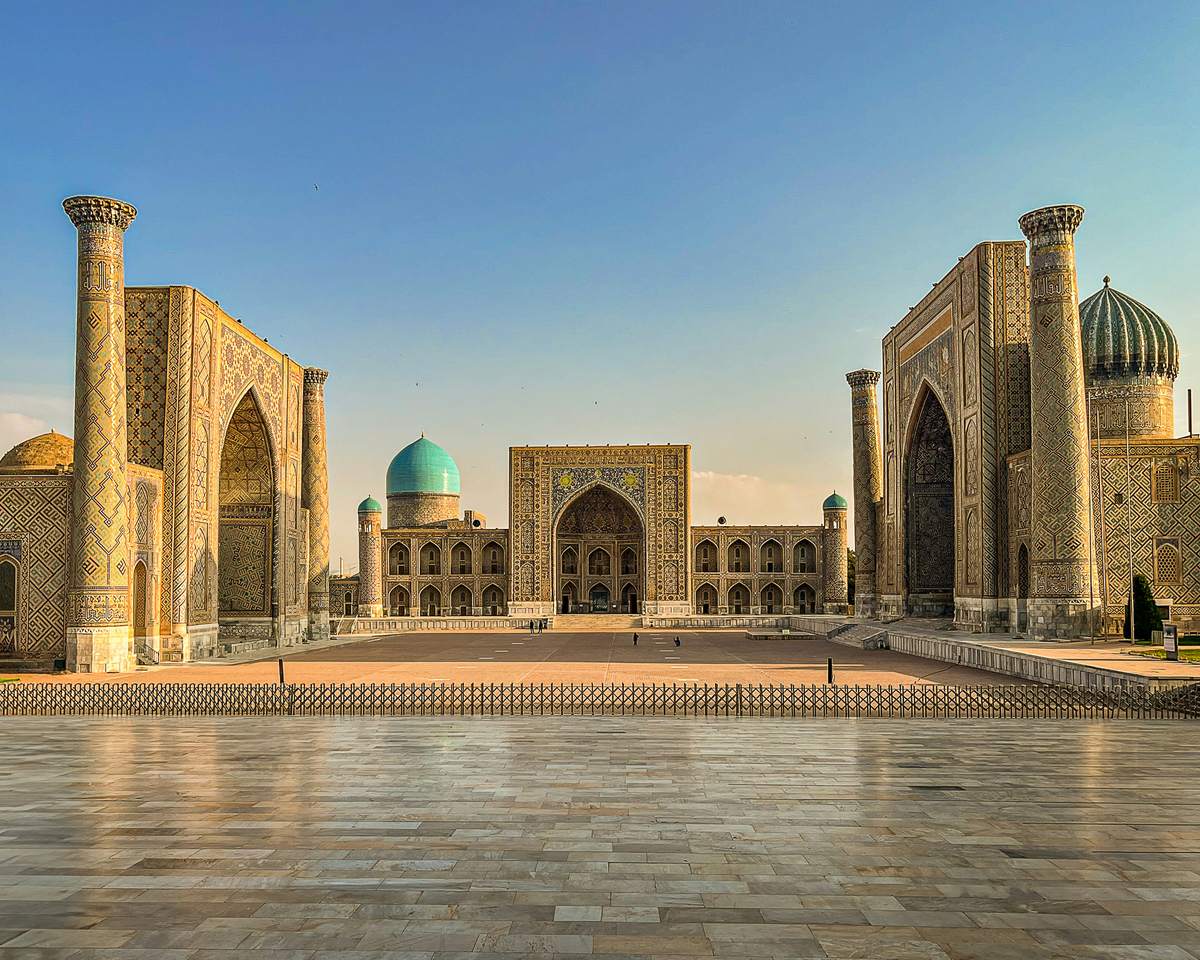
Samarkand has been a key city of the Great Silk Road for most of its recorded life, and in the early twenty-first century UNESCO inscribed it on the World Heritage List under the name Samarkand — Crossroads of Cultures. The name is exact. Persian, Turkic, Mongol, Arab and Russian histories all left something standing here.
For Pakistani visitors it is usually the emotional centre of the journey. This is the city of Amir Temur, and the resting place of Imam al-Bukhari lies a short drive outside it.
What to see
- The Registan — three madrasahs facing a single square: Ulugh Beg, Sher-Dor and Tilya-Kori. Go at first light for the quiet, and again after dark when they are lit.
- Shah-i-Zinda — a narrow avenue of mausoleums covered in majolica tile, including the maqam of Qasam ibn Abbas (RA).
- Gur-e-Amir — the tomb of Amir Temur, under a fluted turquoise dome.
- Bibi-Khanym Mosque — built at the scale Temur thought an empire deserved.
- Ulugh Beg's Observatory — the surviving arc of the great sextant, where a fifteenth-century astronomer measured the year to within a minute.
- Siab Bazaar — bread, spices, dried fruit, and the best conversation in the city.
- Imam al-Bukhari Memorial Complex — about 25 km outside the city at Hartang. See our ziyarat page.
How long to stay
Two days covers the main ensembles without rushing. Three is better if you are including the Imam al-Bukhari complex and want an unhurried morning at the Registan. Most itineraries from Pakistan reach Samarkand from Tashkent on the Afrosiyob high-speed train in a little over two hours.