The region's history reaches back to at least the second century BC, and the first mention of Bukhara records its capture by the Persian king Cyrus in the sixth century BC. Caravans from India and China passed through this territory for centuries, and much of what they built is still standing.
Bukhara is where Uzbekistan feels least like a museum and most like a working old city. People live inside the historic centre, and the tea houses around the pools are for them, not for tour groups.
What to see
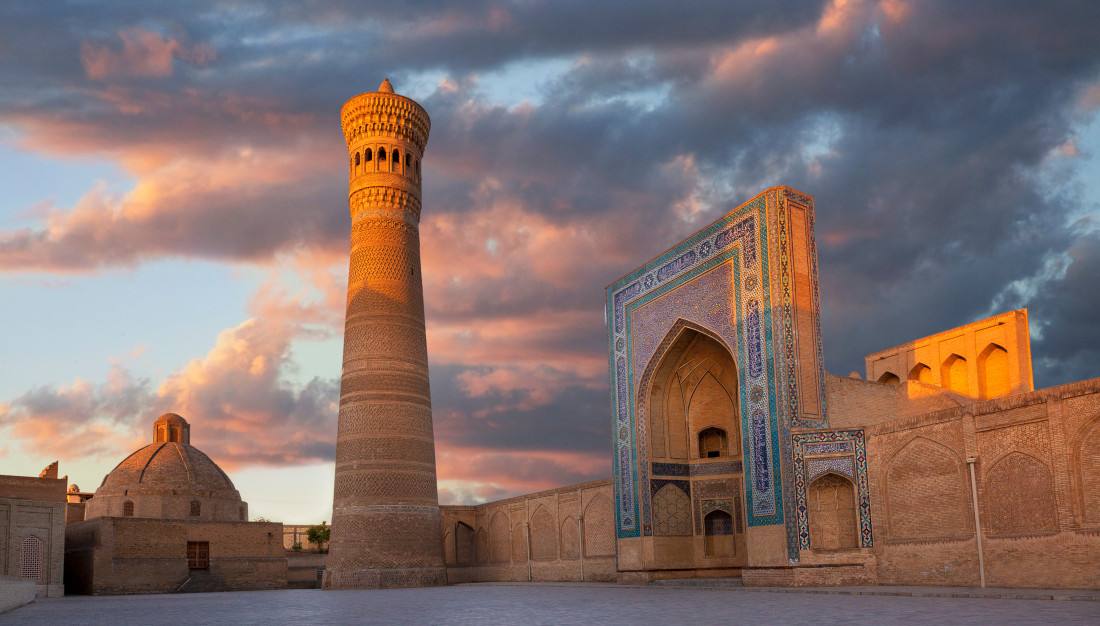
- Poi-Kalon — the Kalyan minaret, the mosque and the Miri Arab Madrasah around one square. The minaret has stood since 1127.
- The Ark — the fortress of the emirs, above the old town.
- Lyabi-Hauz — the pool, the mulberry trees, and the slowest tea in Central Asia.
- Chor Minor — four small towers, each different, tucked into a residential lane.
- Trading domes — Toki-Zargaron and its neighbours, where jewellers and hat-makers still trade.
- Bahauddin Naqshband Complex — the heart of the Naqshbandi path, a short drive from the city. See our ziyarat page.
- Chashma-Ayyub — the spring associated with the Prophet Ayyub (AS).
How long to stay
Two days. One is enough for the main ensembles; the second is what makes people love the city. Bukhara connects to Samarkand and Tashkent by high-speed train, and to Khiva by road across the desert.